FAQ: 15 Questions Buyers Ask About Coil Packing Lines
he 15 questions buyers ask about coil packing lines — scope, product data, price, automation level, materials, integration, safety, FAT/SAT, and ROI — with people-first answers to prepare your scope package.
FAQ: 15 Questions Buyers Ask About Coil Packing Lines
FAQ: 15 Questions Buyers Ask About Coil Packing Lines
The most useful questions about a coil packing line are not "how much does it cost?" They are questions about scope, product, packaging, integration, and evidence. This FAQ gives a people-first set of answers that help buyers prepare the scope for an automatic coil packing line instead of jumping to a price.
1. What Is a Coil Packing Line?
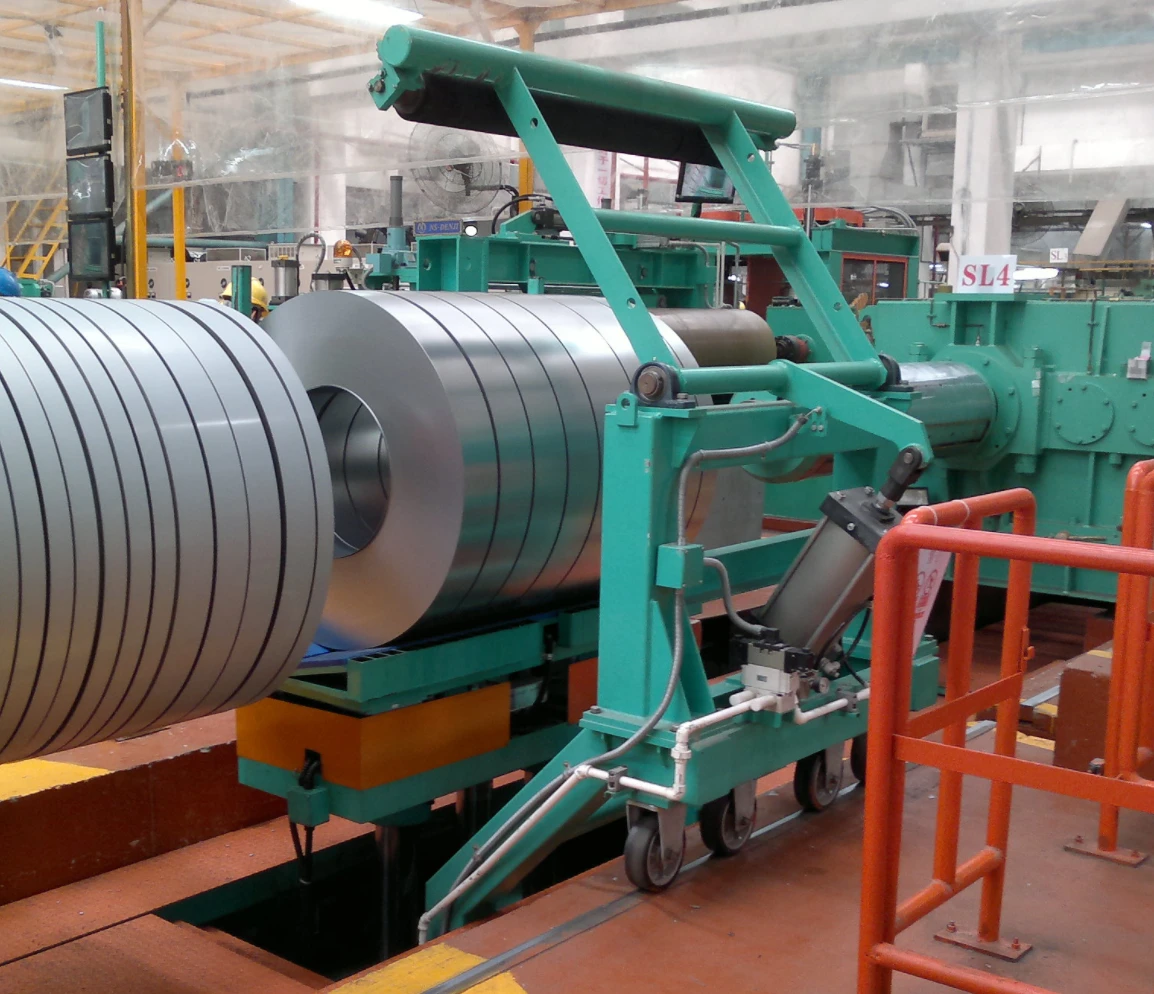
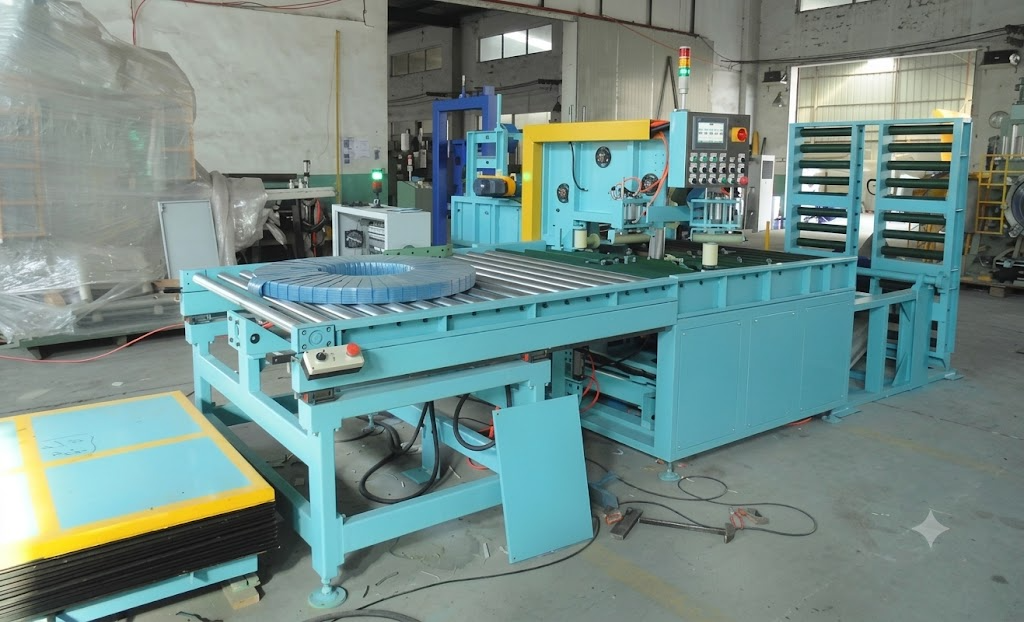
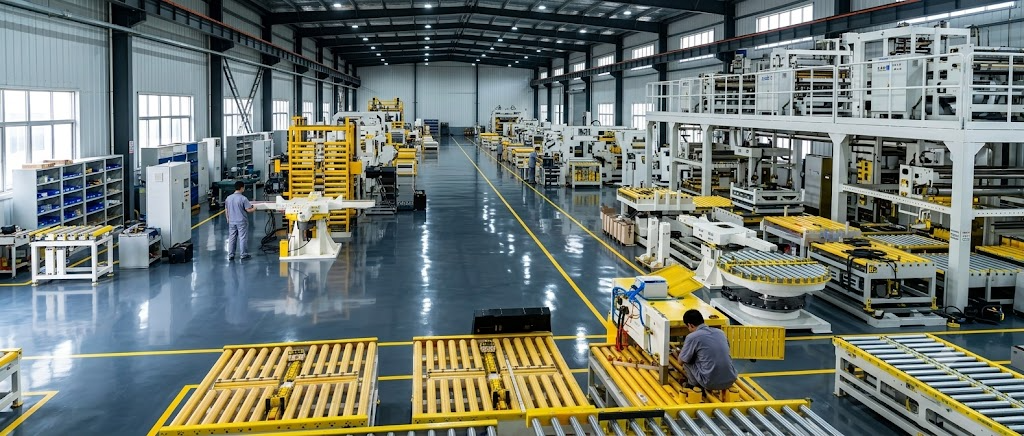
A coil packing line connects handling, wrapping, strapping, weighing, labeling, and stacking into one controlled flow. A coil wrapping machine is one station within that system.
2. Do I Need a Wrapping Machine or a Packing Line?
If the coil is presented and discharged manually and only needs wrapping, a wrapping machine may be enough. If the scope includes transfer, strapping, weighing, labeling, or stacking, define it as a packing line.

The image shows two people at a steel coil wrapping machine on the plant floor. A wrapping machine is one station; a packing line adds the transfer, strapping, weighing, labeling, and stacking around it.
3. What Is the First Thing I Should Define?
Define the product population and the final package. The line is specified from the real coil mix and the required package result, not from a machine name.
4. What Data Does a Supplier Need?
Material and surface, inner and outer diameter, width, weight, orientation, release pattern, packaging materials, floor space, utilities, and acceptance criteria.
5. Why Is There No Single Price?
Price depends on coil range, automation level, interfaces, safety, delivery, and acceptance scope. Compare quotations on the same technical scope, not only the total.
6. What Does "Fully Automatic" Mean?
It should mean defined automatic actions, supervised tasks, and a controlled exception route. Without those definitions, the word is only marketing.
7. How Fast Will the Line Run?
Ask what boundary the cycle time includes: loading, wrapping, strapping, weighing, labeling, stacking, changeover, and recovery. Compare accepted output per shift, not only the fastest motion.
Watch a steel strip coil packaging line with strapping, labeling and stacking:

8. What Packaging Materials Can Be Used?
Typical materials include stretch film, VCI film or paper, opaque film, paper, edge protection, and strapping. The recipe must match the coil surface, route, and storage time.
9. Does the Line Need ERP/MES Integration?
Only if the release record requires it. If integration is needed, define the fields, source of truth, failure behavior, and audit trail before choosing a system.
10. What Safety Requirements Apply?
Guarding, interlocks, access control, and lockout-tagout should follow a site-specific risk assessment. A regulation or certification claim should be supported by evidence.
11. What Should FAT/SAT Test?
Normal product flow, extreme cases, changeover, material replenishment, data exceptions, blocked coils, safety functions, and controlled recovery.

The image shows a project management meeting with a screen, where FAT/SAT evidence is reviewed before the line is released. The test list should be agreed here, not improvised at the factory.
12. How Do I Calculate ROI?
Measure the current baseline, define capital and operating costs, and build conservative, expected, and optimistic scenarios. Validate the model after installation.
13. What Is the Biggest Cause of Project Failure?
An unclear scope: undefined product mix, missing package specification, or an unresolved interface. The machine usually works; the boundary was not defined.
14. Should I Start with a Semi-Automatic Line?
If the product mix is uncertain or the exception rate is high, a semi-automatic scope can validate the flow before full automation. The right level follows the measured constraint.

The image shows a bottleneck diagnosis at a coil wrapping machine in a factory. Measuring the actual constraint first tells you whether the line should be semi-automatic or fully automatic.
15. What Should I Ask a Supplier Before Signing?
Ask for the assumption list, scope matrix, technical evidence, safety boundary, delivery responsibility, training, spare parts, and acceptance criteria.
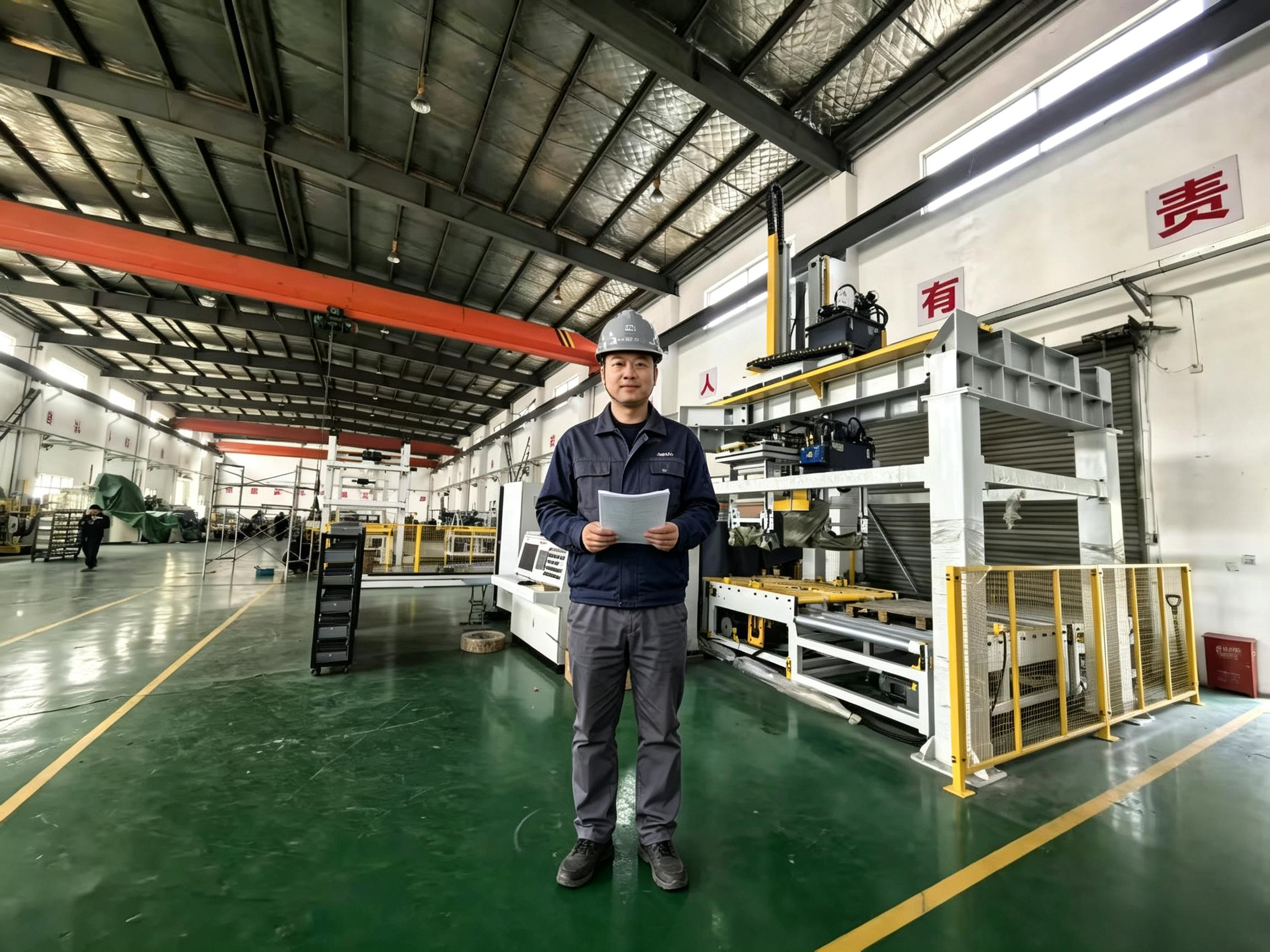
The image shows an after-sales engineer working on a coil packaging line. The questions before signing should also cover the service after handover: spare parts, training, response time, and support ownership.
A Practical Next Step
Use these questions to prepare your scope package for the automatic coil packing line. The supplier's answers will tell you more than a brochure or a price.
Visual Details
Click to enlarge
Click to enlarge
Click to enlarge
Click to enlarge
Watch How It Works
Discover how our automated packaging solutions optimize your production line efficiency. This video demonstrates the seamless operation designed for maximum protection.
Trusted by Steel Mills & Industry Leaders
Global manufacturers rely on FHOPE heavy duty packaging equipment


Ready to optimize your packaging line?
Get a custom quote with ROI analysis. Our engineers respond within 24 hours.
- Free layout design
- Global installation support
- 2-year warranty included
Your information is secure and will never be shared.
Related Machines
Steel Coil Packaging line
View Details →
Vertical coil packaging line
View Details →
Hose Coil Packaging line
View Details →
Copper Coil Packaging line
View Details →
Wire Coil Packaging line
View Details →
Panel Packaging line
View Details →
Pipe Bagging Machine
View Details →
Aluminum profile packing line
View Details →
FHOPE Automatic pipe tube bundling&strapping line
View Details →
Automatic pipe tube bundling & strapping line
View Details →
Automatic steel tube strapping machine
View Details →
FHOPE Automatic steel tube packing machine
View Details →
Automatic plastic Pipe strapping packing line
View Details →
Automatic PPR/PVC Pipe bagging line
View Details →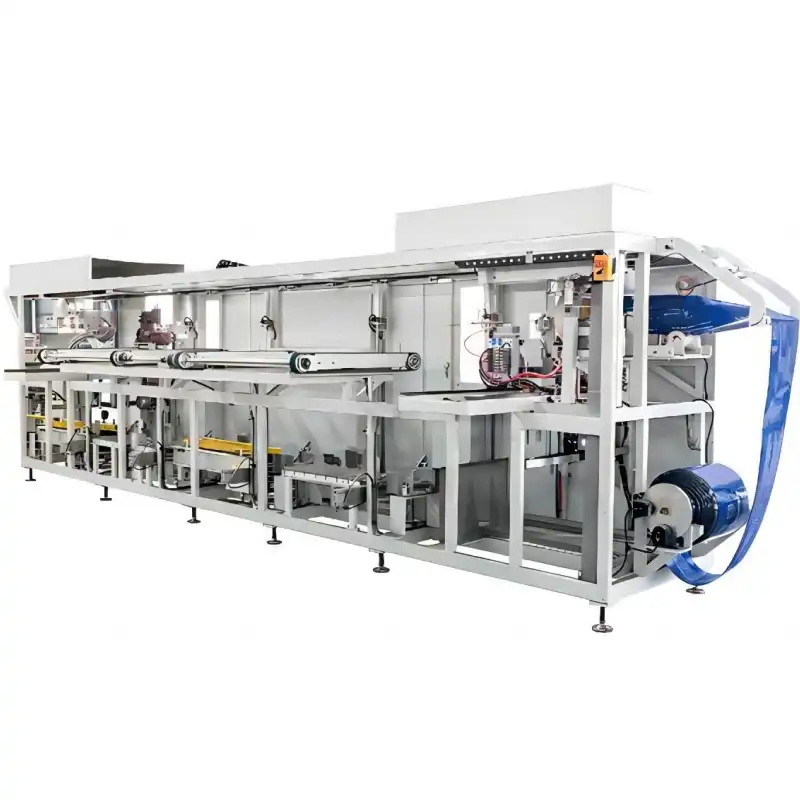
Platsic pipe bag packing machine
View Details →
Tyre Packing Machine FPT-200
View Details →
Tyre Packing Machine FPT-300
View Details →
Tyre Packing Machine FPT-400
View Details →
Cable Coil Packing Machine-FPCA100
View Details →