How Do You Verify Automatic Film Clamping and Sealing?
Automatic film clamping, cutting, and sealing turns a wrap cycle into a finished package. Learn what to verify at the start, the cut, and the tail seal — and how to test all three across your real product mix.

Automatic Film Clamping, Cutting and Sealing: What to Verify
Automatic Film Clamping, Cutting and Sealing: What to Verify
Automatic film clamping, cutting, and sealing is what turns a wrapping cycle into a finished package. If any of the three steps is unstable, the line can still wrap the coil but leave a torn tail, a loose end, or a film path that blocks the next cycle.
This guide helps operators, quality, and maintenance teams verify that the automatic film handling system on an automatic coil packing line is reliable on the real product mix.
| Function | What to verify | Check after movement |
|---|---|---|
| Clamping | Start position, tension, and film path | No slip or film break |
| Cutting | Clean and complete cut, no long tail | Next cycle loads with a clean path |
| Sealing | Tail fixed to the wrapped surface | Tail stays sealed after move and stacking |
Understand the Three Functions
Clamping holds the film at the start of the cycle so the wrapping can begin without losing the material. Cutting separates the film at the end of the cycle. Sealing fixes the tail to the wrapped surface so it does not unwind.
These functions work together. A good cut cannot save a weak seal, and a good seal cannot repair a damaged tail.
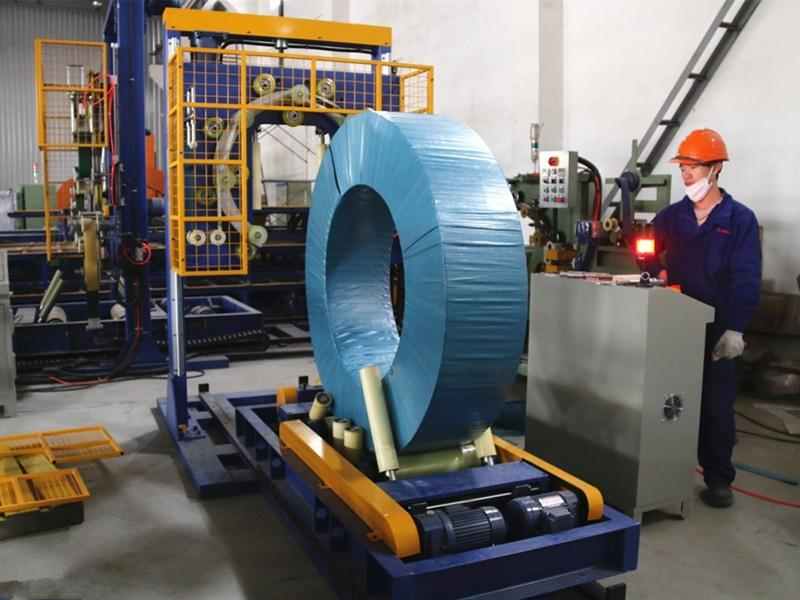
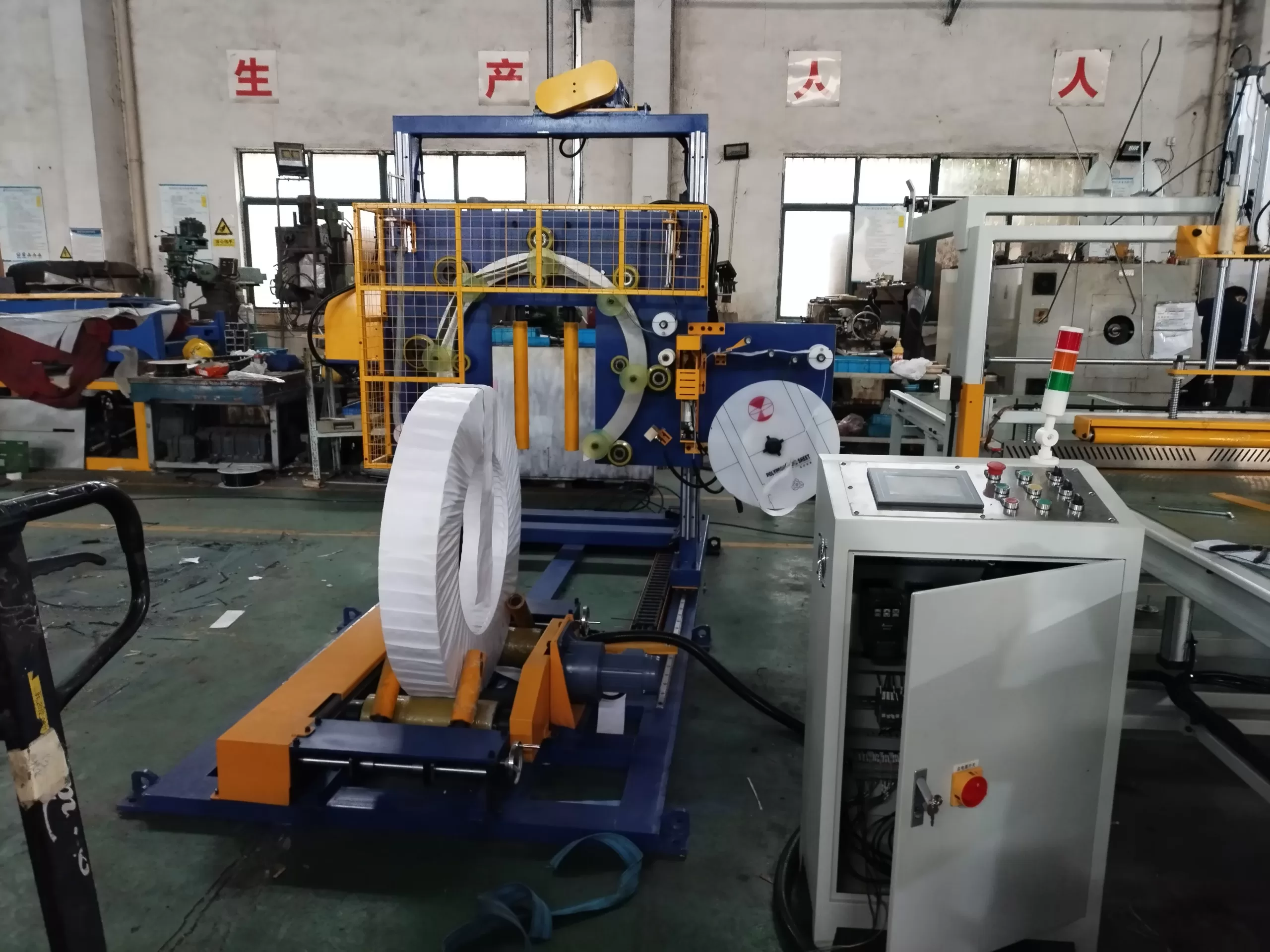
The image shows an automatic steel coil packing machine. The clamping, cutting, and sealing functions must be verified together, because the finished package depends on the whole film-handling sequence.
Verify the Start of the Cycle
Check that the film is clamped at the correct position, the tension is set, and the film path is not twisted or damaged. The first wrapping layer should follow the defined overlap pattern.
If the clamp is worn or misaligned, the film may slip or break at the start of every cycle.
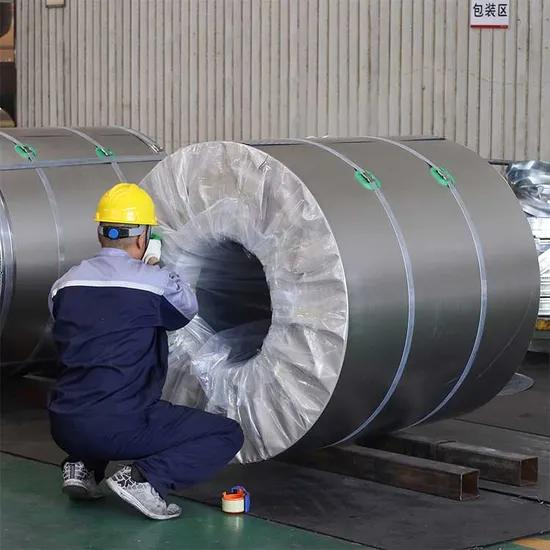
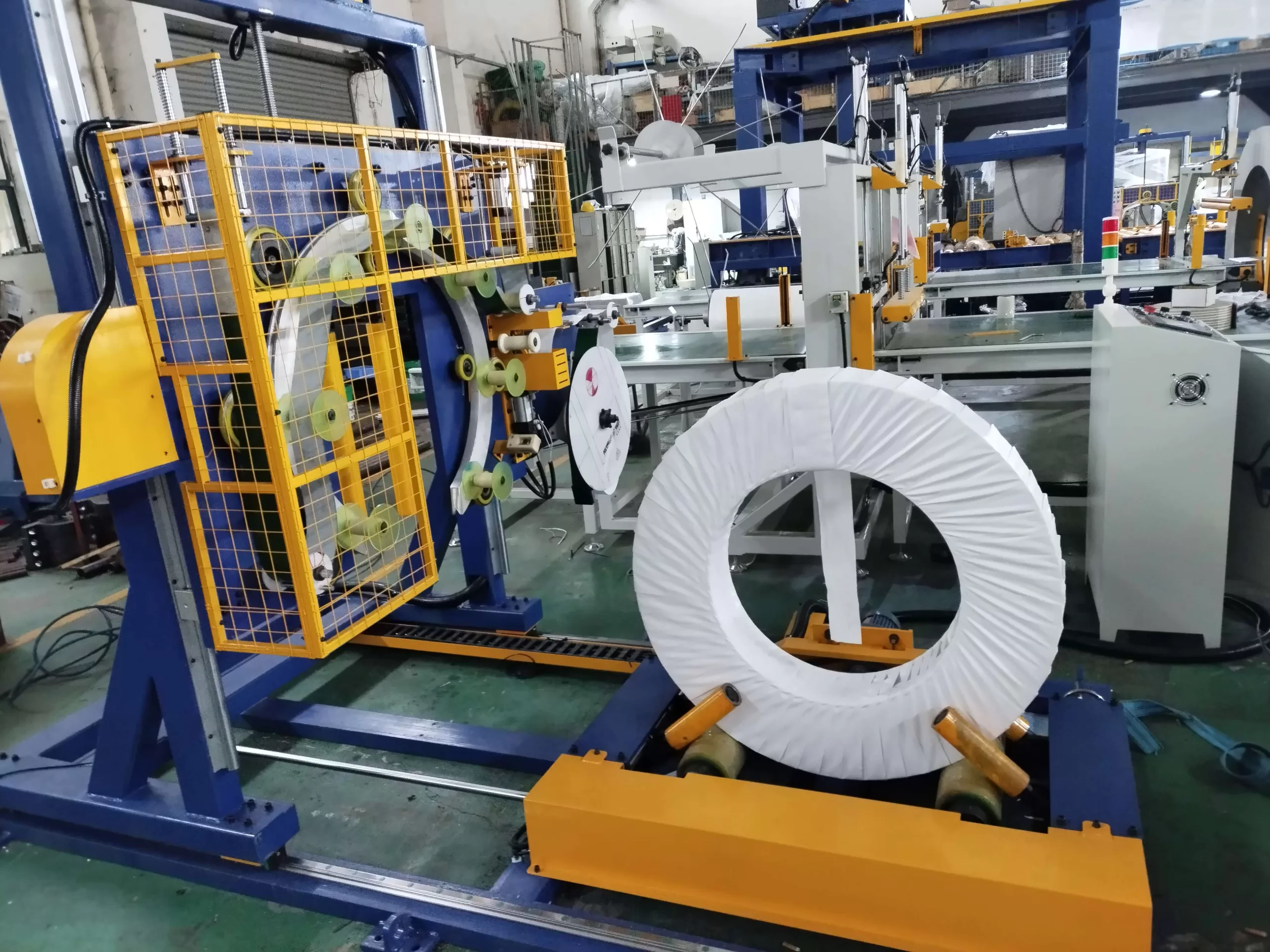
The image shows a VCI stretch film setup with an operator. The film path, clamp position, and tension must be checked at the start of the cycle before the first layer is applied.
Verify the Cut
The cut should be clean and complete without leaving a long tail or a damaged film edge. Check the cutting blade, the timing, and the condition of the film.
A partial cut can cause the next coil to load with an irregular film path.
Verify the Seal
The tail should be sealed firmly to the wrapped surface and should stay sealed after the coil is moved, stacked, or handled. Check the seal mechanism, temperature or pressure where applicable, and the position of the tail.
Test the tail after the coil moves to the next station, not only while it is stationary.
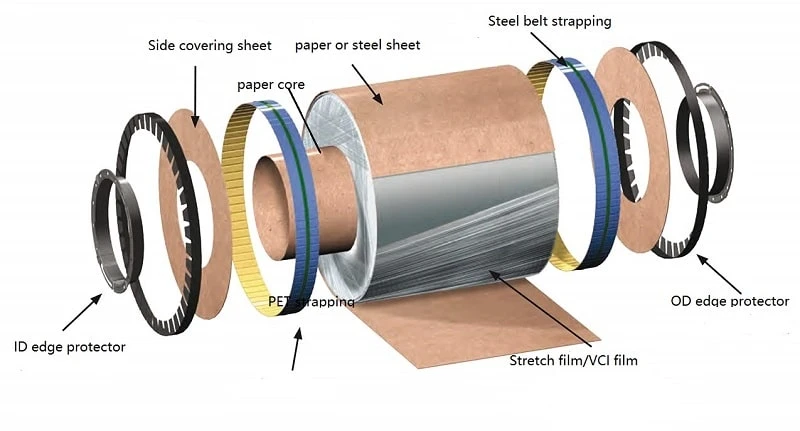
The image shows a cross-section diagram of the package layers. The tail seal is part of the outer wrap: it must hold the layers together after the coil is moved and stacked.
Test Across the Product Mix
Run the automatic clamping, cutting, and sealing functions on the narrowest, widest, and most sensitive coils. Include material changes and a full shift to detect wear or drift.
Record the number of film breaks, incomplete cuts, and tail failures during the trial.
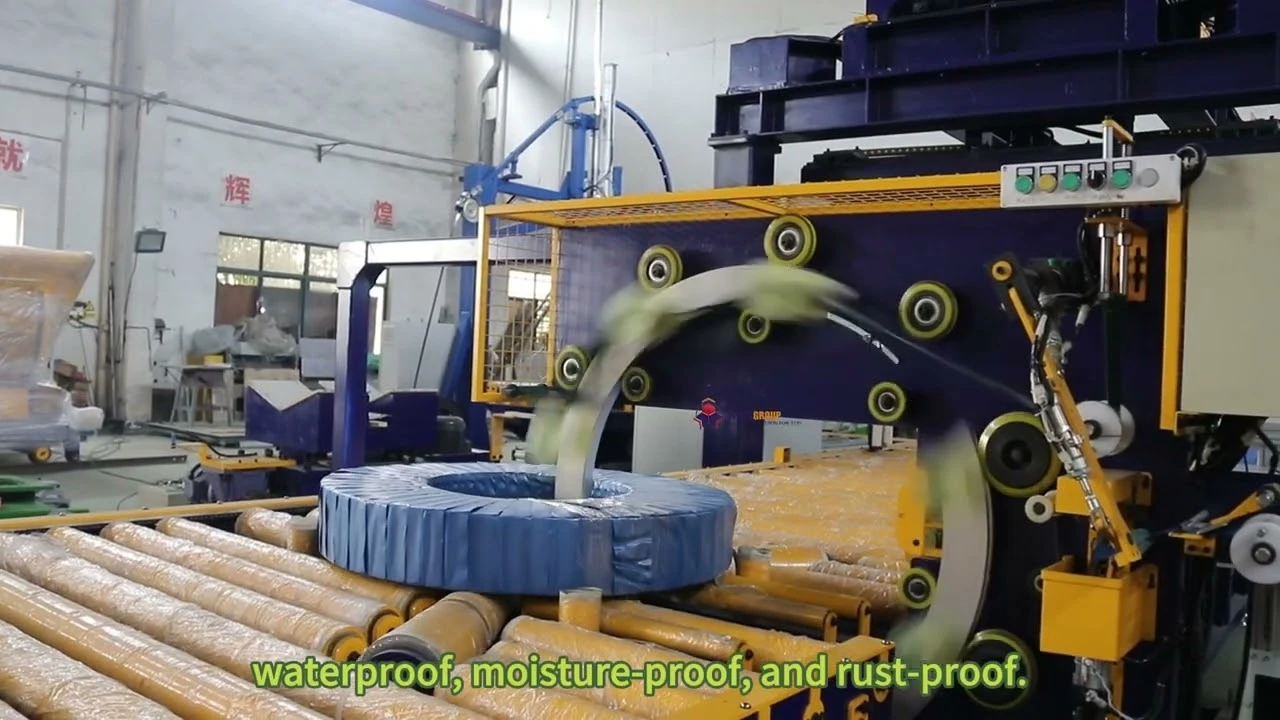
The image shows FAT acceptance testing and packaging quality scenarios. The clamping, cutting, and sealing trial should be part of the same acceptance matrix, covering material change and repeated cycles.
Check Replenishment and Recovery
When a film roll runs out, the operator should be able to load a new roll without bypassing the guard or resetting the line in an unsafe way. The procedure should include the first-article check after material change.
A Practical Next Step
Add a clamping, cutting, and sealing verification to the FAT/SAT checklist. Inspect the start, the cut, the tail, and the package after movement for each representative family.
Use the same evidence to compare the automatic coil packing line configuration before acceptance.
Watch a vertical wrap packaging machine for heavy steel coils with car trolley in operation:

Visual Details
Click to enlarge
Click to enlarge

Click to enlarge

Click to enlarge
Watch How It Works
Discover how our automated packaging solutions optimize your production line efficiency. This video demonstrates the seamless operation designed for maximum protection.
Trusted by Steel Mills & Industry Leaders
Global manufacturers rely on FHOPE heavy duty packaging equipment


Ready to optimize your packaging line?
Get a custom quote with ROI analysis. Our engineers respond within 24 hours.
- Free layout design
- Global installation support
- 2-year warranty included
Your information is secure and will never be shared.
Related Machines
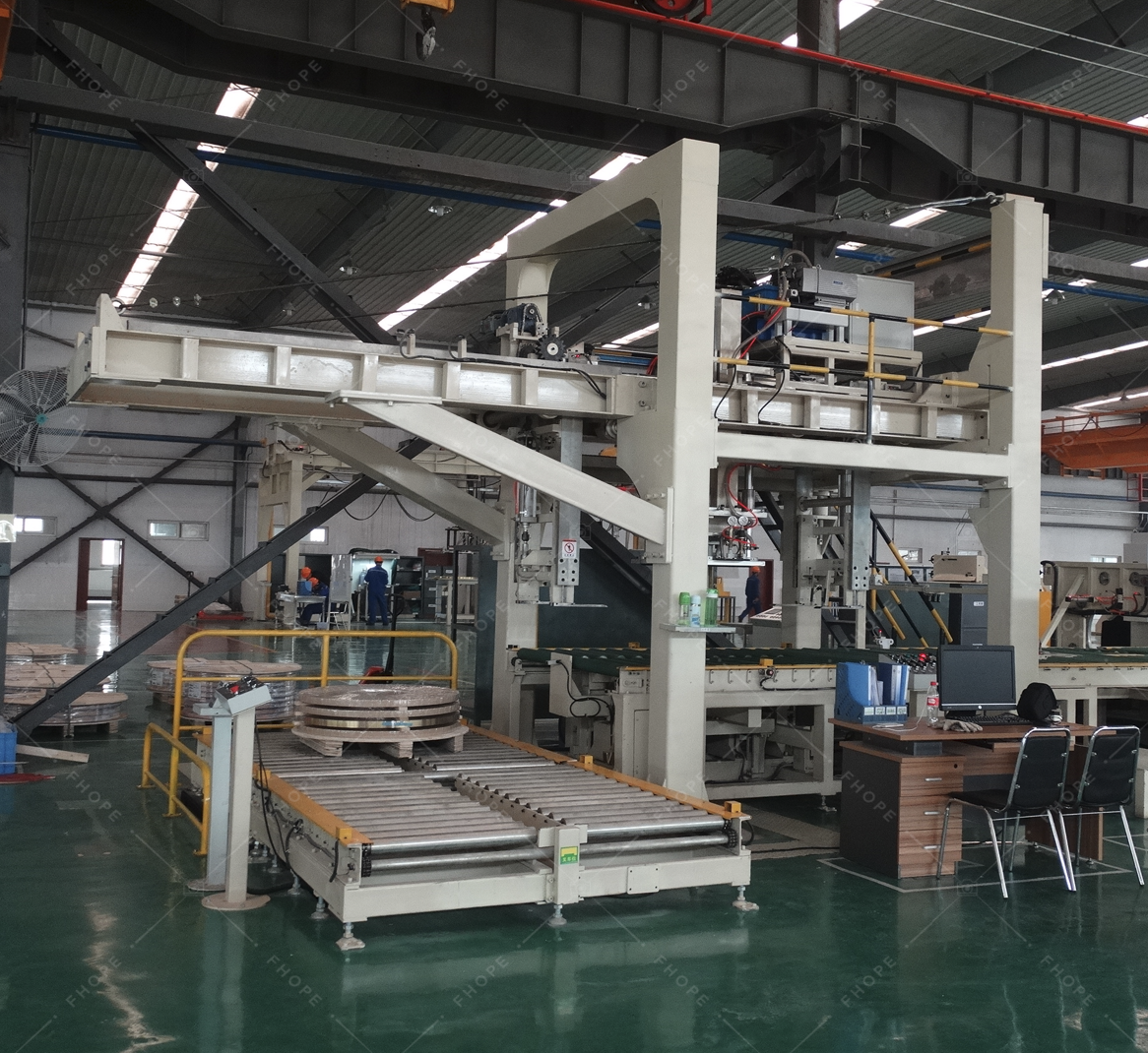
Steel Coil Packaging line
View Details →
Vertical coil packaging line
View Details →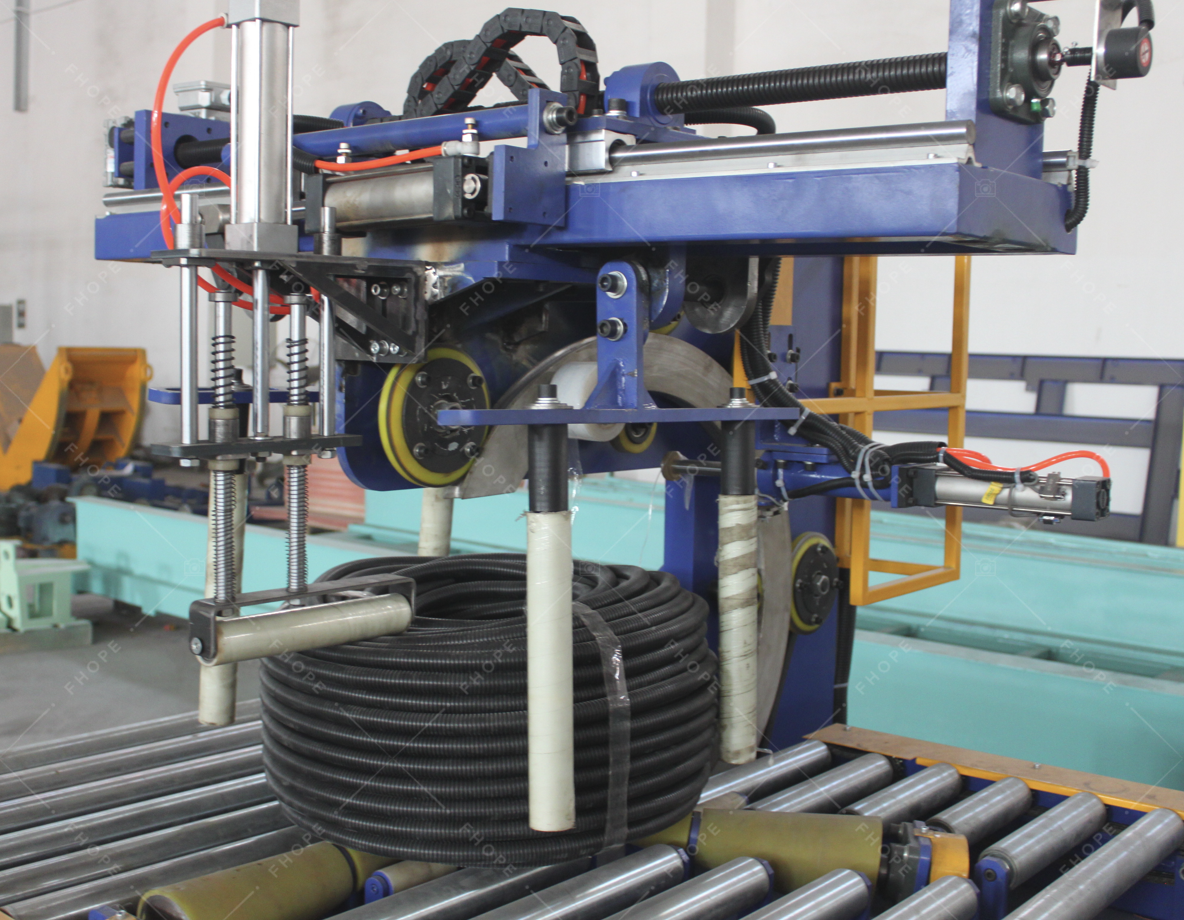
Hose Coil Packaging line
View Details →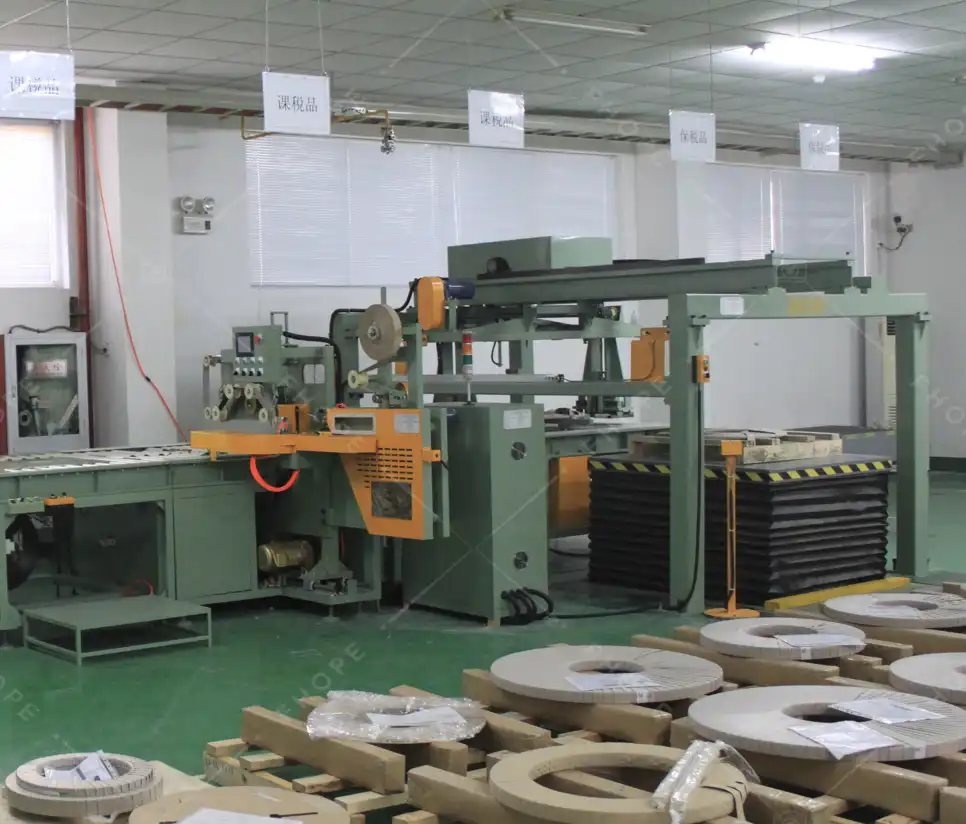
Copper Coil Packaging line
View Details →
Wire Coil Packaging line
View Details →
Panel Packaging line
View Details →
Pipe Bagging Machine
View Details →
Aluminum profile packing line
View Details →
FHOPE Automatic pipe tube bundling&strapping line
View Details →
Automatic pipe tube bundling & strapping line
View Details →
Automatic steel tube strapping machine
View Details →
FHOPE Automatic steel tube packing machine
View Details →
Automatic plastic Pipe strapping packing line
View Details →
Automatic PPR/PVC Pipe bagging line
View Details →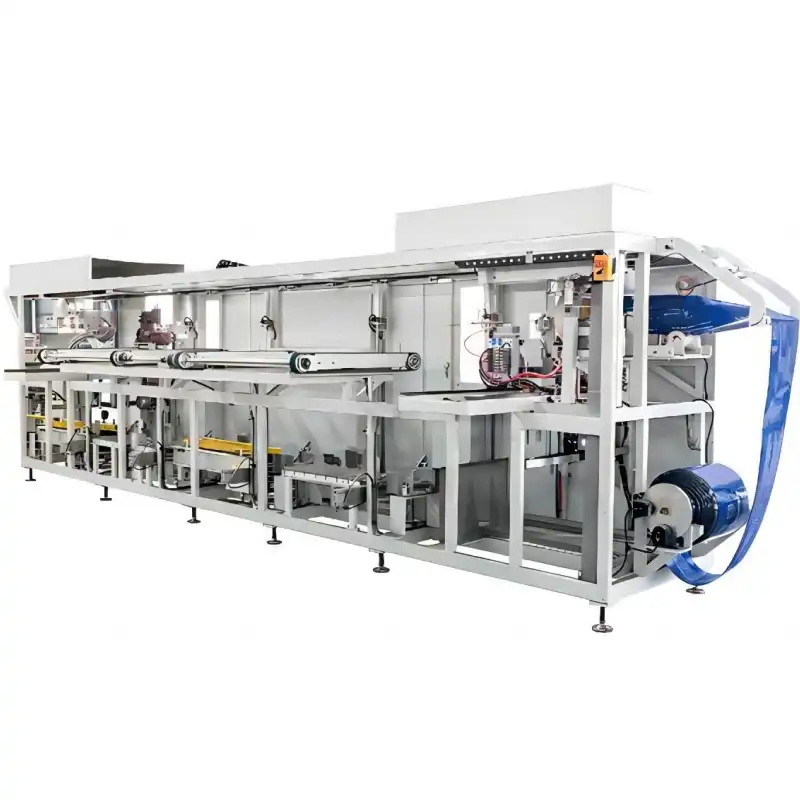
Platsic pipe bag packing machine
View Details →
Tyre Packing Machine FPT-200
View Details →
Tyre Packing Machine FPT-300
View Details →
Tyre Packing Machine FPT-400
View Details →
Cable Coil Packing Machine-FPCA100
View Details →